
Liberty Pest Control Logo
+1 270-936-8574
Multifamily Pest Inspection Checklist

A complete pest inspection covers more than the unit where somebody saw a bug.

This checklist walks you through the places and conditions that can keep a pest problem going or leave the cause unclear — from the report and exterior to common areas, the reported unit, kitchens and baths, vacant turns, and connected units.

Work through it with your team, hand it to your current pest-control company, or have Liberty handle the inspection at no charge.

Free multifamily inspections are available for qualifying properties in Paducah, Kentucky; Hopkinsville, Kentucky; and Bowling Green, Kentucky. Liberty will confirm the scope and access before scheduling. Treatment is separate and is never required.

Request a free multifamily pest inspection

Tell us about the property first. Then give us the best way to respond. This form sends a request; it does not schedule an appointment.

Step 1 of 2 — Property
Areas requested * (Select all that apply)
Having trouble with the form? Call or text +1 270-936-8574.

Before you start

Set up one inspection record for the building, unit, or common area you are checking. The goal is to leave the walkthrough with a clear record of what was seen, where it was found, what could not be checked, and what the next technician needs to answer.

Inspection recordDetails
Property and building
Unit or common area
Date and time
Person completing the walk
Reason for the inspection
Prior work order or service date

Four rules before you walk

  • •
    Write down what you see. “Three dark droppings under the kitchen sink” is more useful than “mouse problem.”
  • •
    Take one close photo and one location photo. The close photo captures the sign. The second photo shows where it was found. Do not photograph faces, documents, medication, or unrelated personal details.
  • •
    Mark anything you could not inspect. A locked, blocked, occupied, unsafe, or inaccessible area should never be left blank.
  • •
    Leave treatment decisions to the professional. Do not spray during the walkthrough, disturb a nest, use a ladder, pull heavy equipment, open electrical panels, enter an unsafe space, or enter an area you are not authorized to access.

Visible signs and symptoms

Use these cards to decide what to document and where to look next. A visible sign may indicate activity, but it does not confirm the pest, source, extent, or treatment.

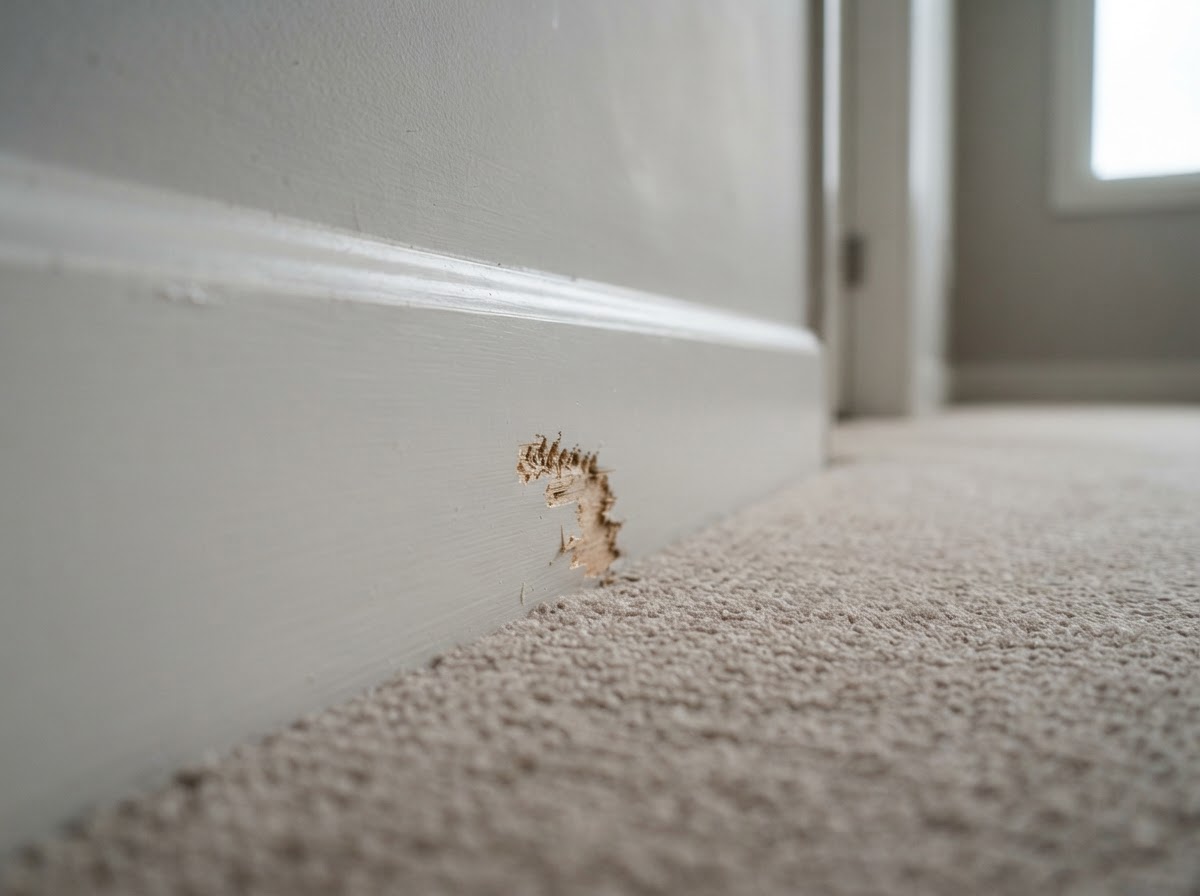
Gnaw marks along a clean wooden baseboard edge

Rodents

If you see: Droppings, gnaw marks, rub marks, shredded material, burrows, tracks, scratching sounds, or food-package damage.

Check: Wall edges, under sinks, accessible stored items, exterior foundations, door edges, utility penetrations, waste areas, and authorized common or utility rooms.

It may mean: A travel edge, access to food or water, nesting material, or an opening is nearby. One sign does not establish the route or source.

Write down: Quantity, size, apparent freshness, exact location, nearby opening or condition, photo number, and whether the area is occupied or handles food.
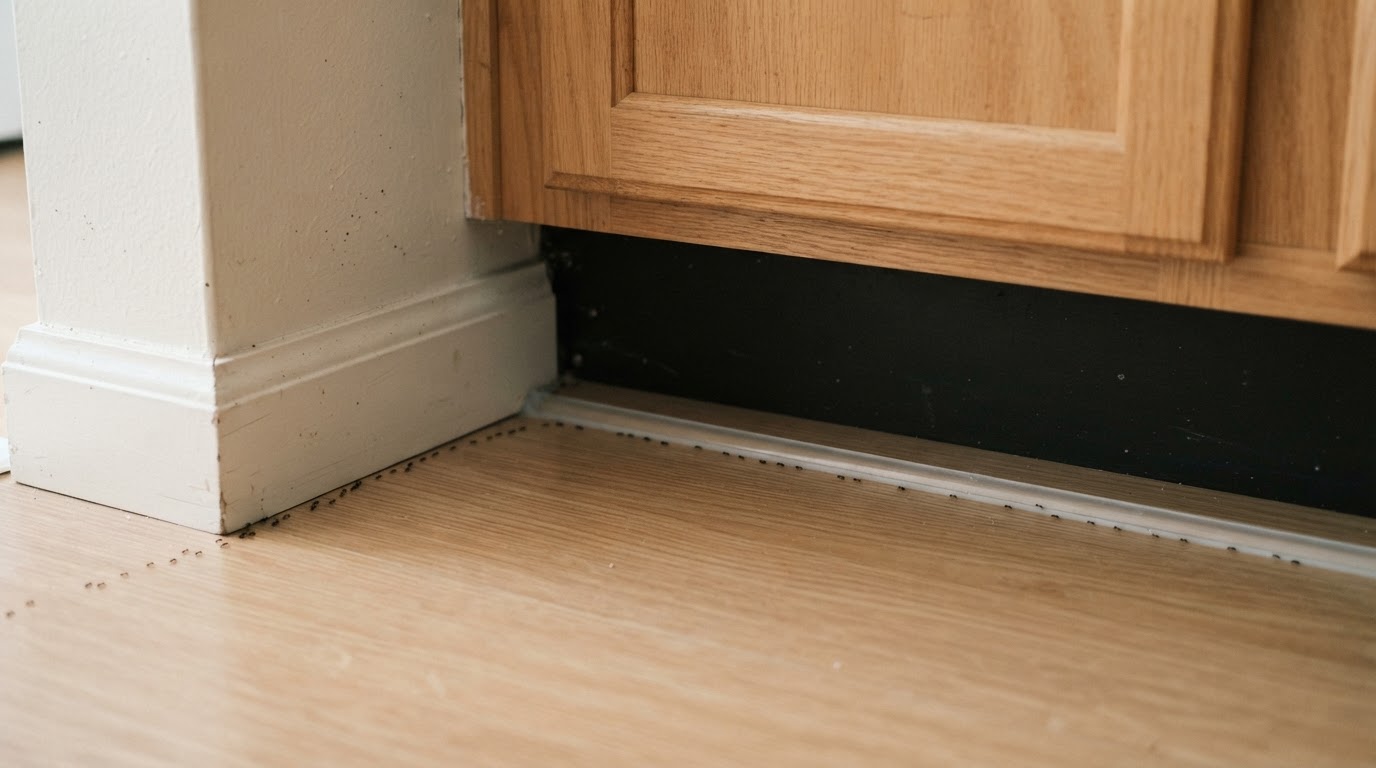
A faint ant trail along a clean wall-floor joint

Cockroaches and ants

If you see: Live or dead insects, shed skins, egg cases, small dark spotting, ant trails, or insects gathering around food, water, or warm equipment.

Check: Accessible cabinet corners, sink bases, plumbing lines, appliance edges, wall-floor joints, laundry rooms, utility spaces, and window or door edges.

It may mean: Food, water, heat, shelter, or a travel route is nearby. Identification matters because similar-looking insects can require different next steps.

Write down: Body size and color, number seen, exact path or resting place, time seen, nearby moisture or food residue, and connected openings.

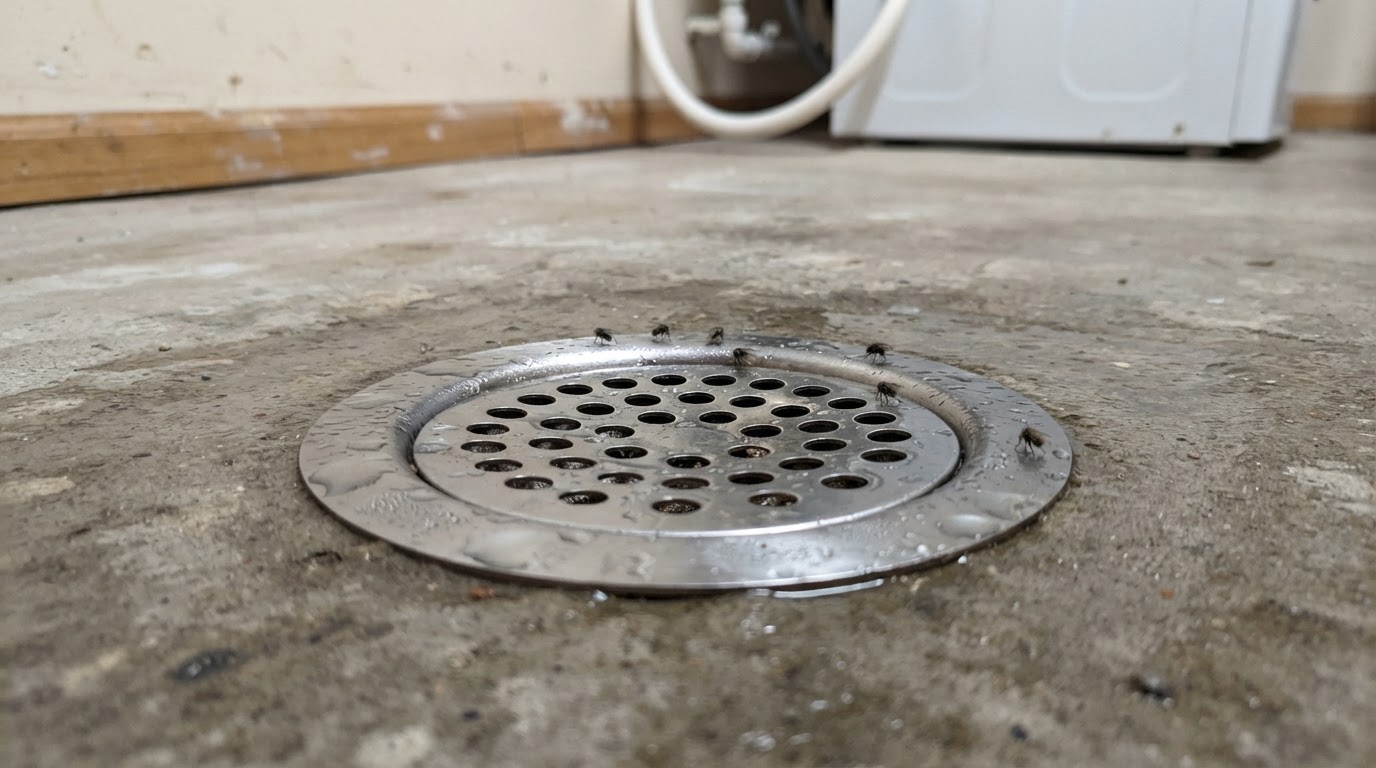
A clean floor drain with light condensation

Drains and flies

If you see: Small flies resting near a drain, repeated adults at a window, larvae or residue in wet organic material, or activity near trash and recycling.

Check: Floor drains, sink overflows, mop areas, condensate lines, trash rooms, compactors, recycling, damp storage, and other wet areas that are safely accessible.

It may mean: A drain or another wet organic source may need cleaning, repair, or professional evaluation. The nearest drain is not always the source.

Write down: Where adults rest, which drains or wet areas are nearby, moisture or residue, cleaning history, odor, and time of activity.

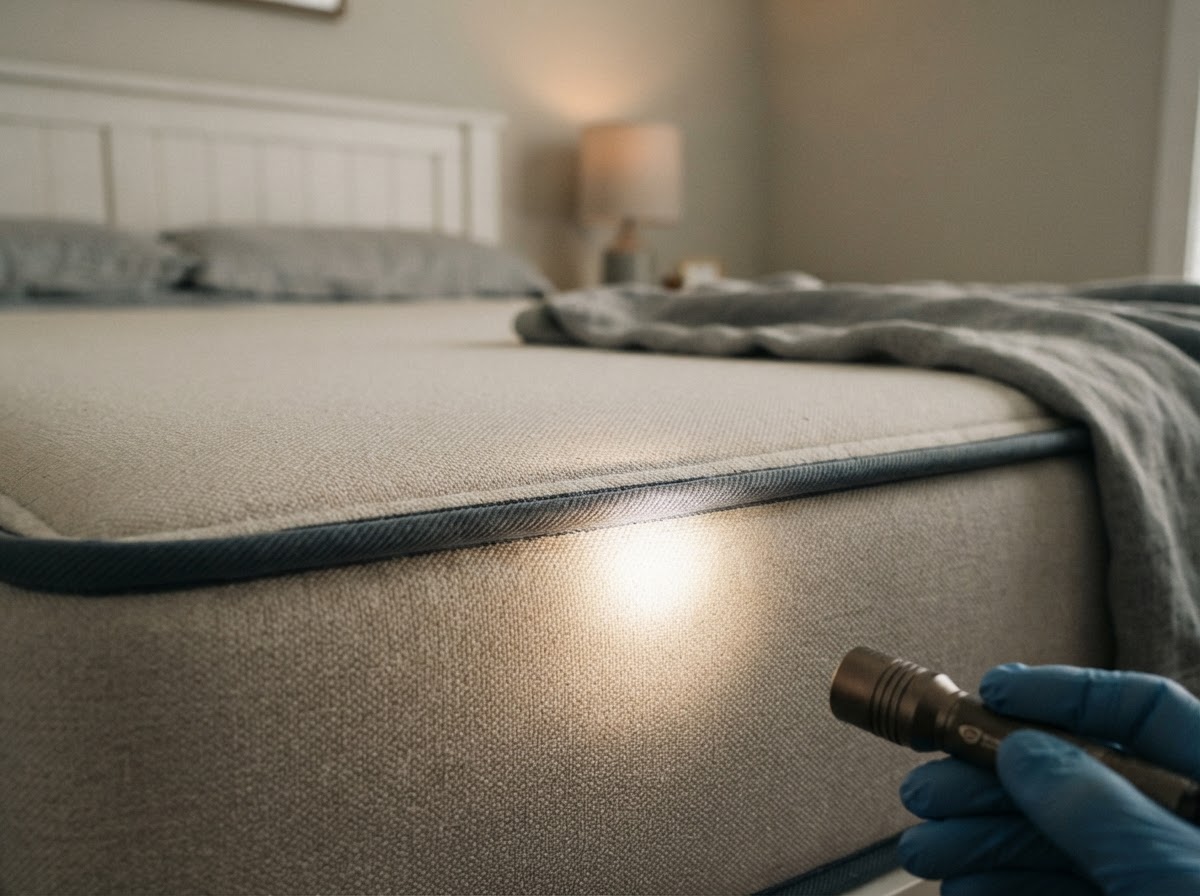
A flashlight inspecting a mattress seam edge

Bed bugs

If you see: A live insect, cast skins, pale eggs or eggshells, dark spotting, or rusty or reddish marks in seams and cracks near a sleeping or resting area.

Check: Accessible mattress and box-spring seams, bed-frame and headboard edges, upholstered furniture seams, baseboards, and nearby cracks. Get permission before checking personal furniture.

It may mean: The evidence needs professional identification. Bites or skin reactions alone do not identify the cause.

Write down: The exact item and seam or crack, photo number, date, prior reports or service, and nearby units or shared areas to discuss with a professional.

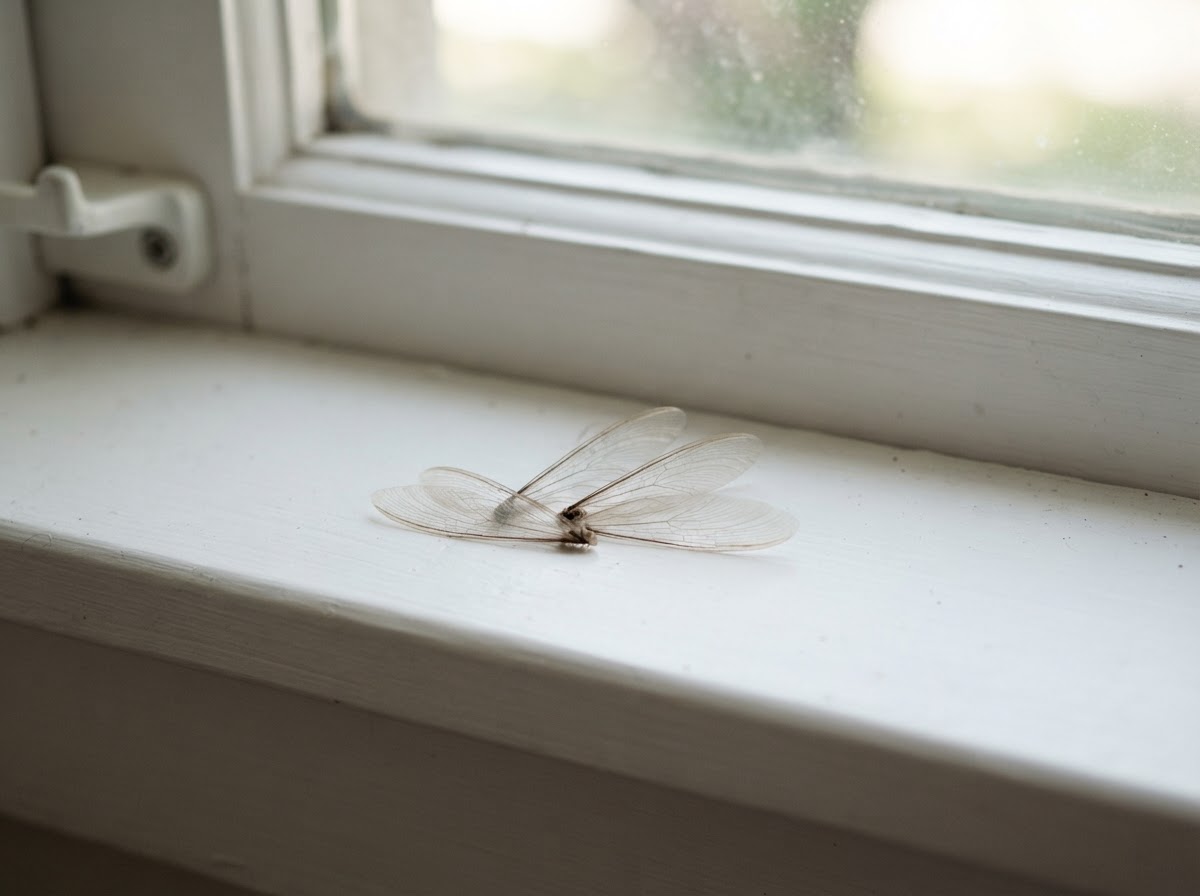
Discarded insect wings resting on a window sill

Wings and wood

If you see: Discarded wings, mud-like tubes or spots, hollow or damaged wood, small exit holes, fine powder, or moisture-damaged wood.

Check: Safely visible foundations, sill areas, door and window frames, utility penetrations, wood touching soil, and damp structural areas. Do not probe, scrape, break, or open the material.

It may mean: The signs can have more than one cause and may require a structural pest inspection or building-repair review.

Write down: Material, shape, exact surface, visibly accessible extent, moisture nearby, photo number, and any concealed or unsafe area not inspected.

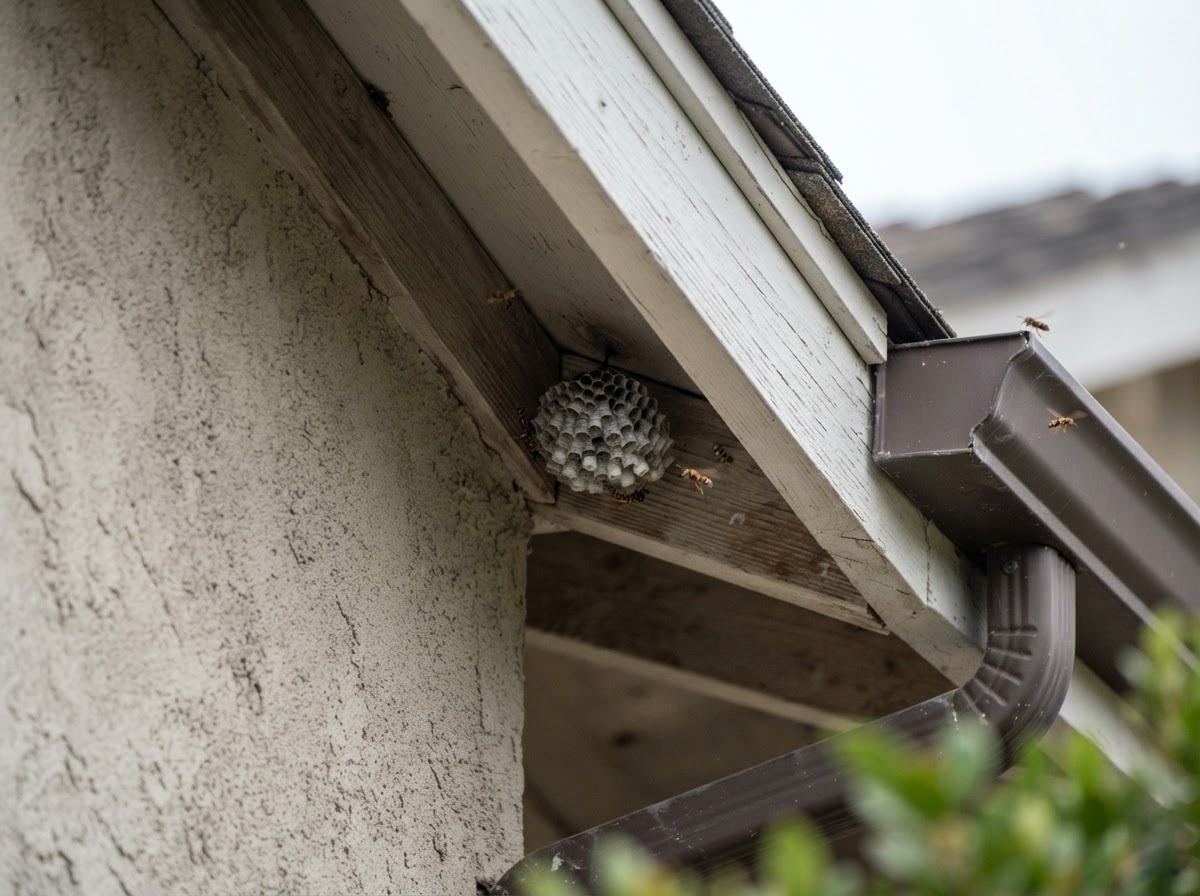
A small wasp nest under a roof eave seen from a safe distance

Wasps and upper openings

If you see: Repeated flight to one opening, a visible nest, insects gathering on a sunny wall, or insects appearing indoors around upper windows, lights, or ceiling areas.

Check: Eaves, soffits, vents, roof transitions, wall penetrations, upper windows, door frames, attic access areas, and exterior light fixtures from the ground or another safe location.

It may mean: A nest, exterior entry point, or seasonal movement through an upper opening may be nearby. Do not assume which one.

Write down: Flight path or gathering point, height, opening, time of day, occupied area below, and a photo taken without approaching or disturbing the insects.

Property walkthrough checklist

Work from the report to the property perimeter, then through shared and interior areas, and finish with connected-area mapping and a clear handoff. Check only what is safely visible, accessible, and authorized.

The 11-area, 64-check checklist is locked

Enter your name and work email to unlock the full property walkthrough checklist. It stays free to use — we’ll just confirm who’s using it.

Already unlocked on this device? Your access is remembered.

What an unresolved pattern can mean for the property

A documented pattern does not predict or guarantee an outcome. Depending on the property and what a professional finds, unresolved activity or access limits may contribute to:

  • more upset residents or staff;
  • repeat work orders, notices, vendor visits, and access coordination;
  • negative reviews or difficult transfer, renewal, or turnover conversations;
  • delayed cleaning, repair, inspection, or release of a vacant unit;
  • separate program-specific issues where particular housing requirements apply; or
  • later treatment that requires more access, preparation, monitoring, or disruption.

Use the record to decide who owns the next property task, what the technician still needs to inspect, and when the result will be checked.

What to hand your current pest-control technician

Use this worksheet with the pest-control company already servicing the property or with any qualified professional you bring in.

Inspection handoff

Property tasks

Property taskOwnerDue dateComplete

When to stop and call a professional

Stop the staff walkthrough and contact a qualified pest professional when:

  • stinging insects, a nest, or repeated flight is close to people, an entrance, a work area, or any area that would require a ladder, close approach, or disturbance;
  • signs may be bed bugs, especially on or near sleeping and upholstered furniture;
  • wings, mud-like tubes or spots, damaged wood, exit holes, or powder may involve termites or another wood-destroying insect;
  • reports are widespread or line up across connected units, floors, risers, or shared building areas;
  • rodent evidence is in an occupied unit, food-handling area, kitchen, pantry, child-use area, or another sensitive location;
  • activity continues after service, monitoring, cleaning, repair, or exclusion work;
  • the relevant space is concealed, locked, structurally unsafe, contaminated, electrically hazardous, or otherwise inaccessible; or
  • someone must identify the pest, choose monitoring, decide whether treatment is needed, or select a treatment method.

Do not use this checklist as a reason to apply an over-the-counter or property pesticide. Preserve the evidence, limit access to an unsafe area, and let the professional determine the next step.

Have Liberty handle the full walkthrough

Liberty offers free pest inspections for qualifying multifamily properties in Paducah, Kentucky; Hopkinsville, Kentucky; and Bowling Green, Kentucky. Liberty confirms the scope and access before scheduling.

During the visit, a pest professional reviews the agreed areas that are accessible. At the end, the professional walks through the observations, inaccessible areas, and next steps with you.

You can use that information with Liberty or the property’s current pest-control provider. No treatment is included or required.

Free inspection FAQ

Is the inspection really free?▼

Yes. It is free for qualifying multifamily properties in the listed service areas. Liberty confirms whether the property qualifies and confirms the scope and access before scheduling. Treatment and other work are separate.

Can we use the information with our current pest-control provider?▼

Yes. You can use the observations, inaccessible-area list, property tasks, and next questions with Liberty or the pest-control company you already use.

What areas can the inspection include, including occupied units?▼

Before scheduling, Liberty and the property agree on the scope and access plan. Occupied units may be included when the property provides the required authorization, notice, coordination, and safe access. The professional reviews only the agreed areas that are accessible.

Is treatment included?▼

No. Treatment is not included or required. If treatment is worth discussing after the inspection, that is a separate conversation and proceeds only after authorization.

What service areas are included?▼

The offer is for qualifying multifamily properties in Paducah, Kentucky; Hopkinsville, Kentucky; and Bowling Green, Kentucky. Select Other or not sure if the property is nearby and you want Liberty to confirm availability.